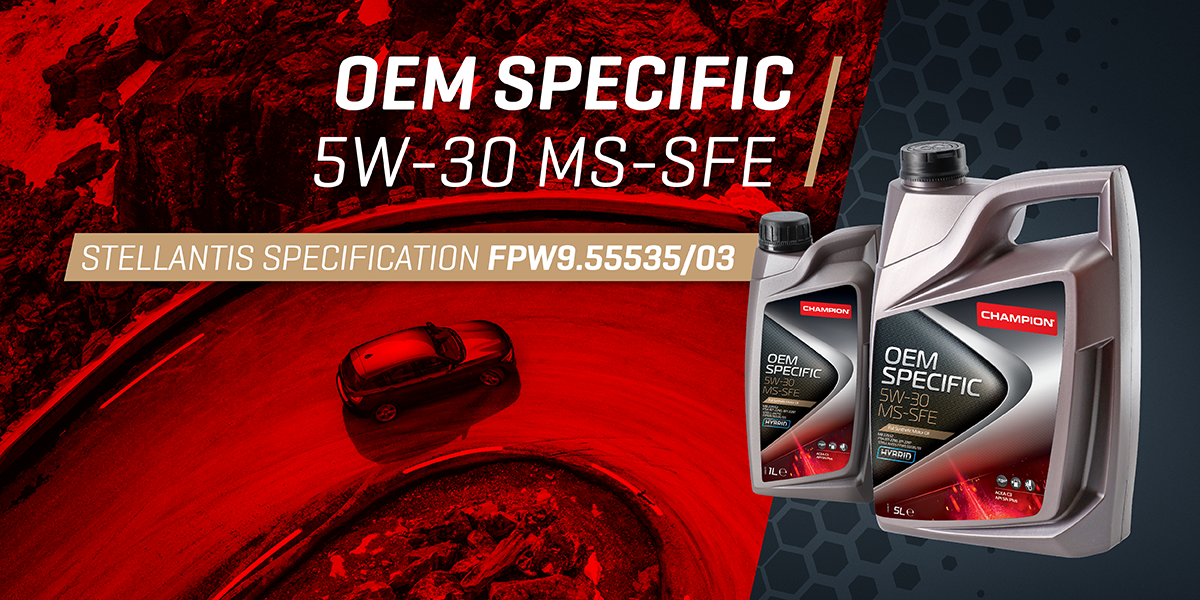
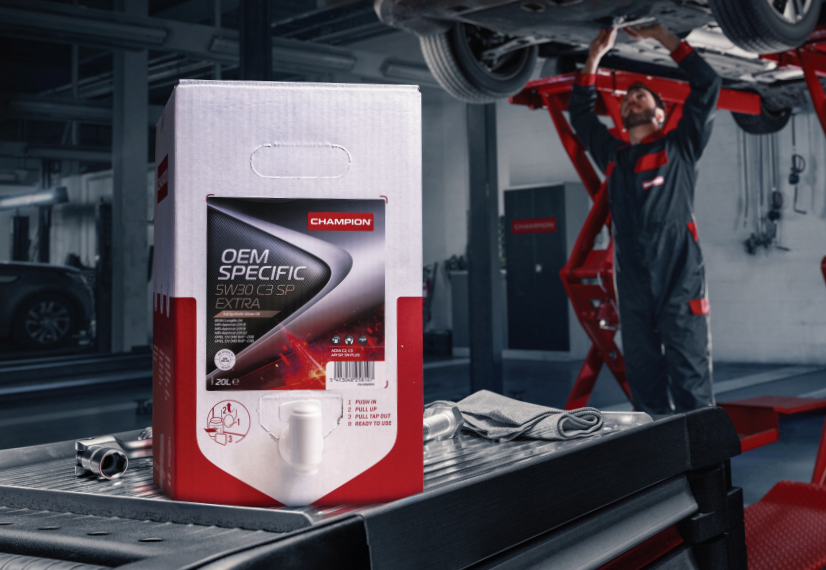
Modern engines are smaller, more powerful, and more efficient than ever. That means they run hotter and place greater demands on lubricants. To address these challenges, the API SQ and ILSAC GF-7 standards were introduced in March 2025, and Champion Lubricants has already updated its OEM SPECIFIC range to meet them.
This article explains what these new standards mean, what’s changing compared to API SP / ILSAC GF-6, and how Champion’s engine oils can help you in the workshop.
WHAT’S NEW AND WHY IT MATTERS
THE ROLE OF THE AMERICAN PETROLEUM INSTITUTE (API)
The American Petroleum Institute (API) is a global authority that develops technical and performance standards for petroleum and lubricants. API standards define the quality and performance levels expected of engine oils worldwide.
In March 2025, API introduced a new service category, API SQ, and ILSAC introduced a new specification, ILSAC GF-7 (GF-7A and GF-7B), replacing the existing API SP and ILSAC GF-6 standards. These new standards impose more severe performance requirements for petrol (spark-ignited) engines, ensuring that oils deliver better protection, durability, and efficiency in modern engine designs.
THE ROLE OF ILSAC
The International Lubricant Standardization and Approval Committee (ILSAC) was founded in 1992 by Ford, General Motors, Chrysler, and the Japan Automobile Manufacturers Association (JAMA).
ILSAC develops minimum performance standards for petrol-engine oils used in passenger cars. Its standards — known as GF-x (e.g., GF-5, GF-6, GF-7) — are based on API categories but include additional requirements for fuel-economy performance and viscosity limits.
ILSAC also works closely with API’s Engine Oil Licensing and Certification System (EOLCS) — a voluntary program that authorises marketers to display the API Certification Mark (“doughnut” and “starburst”) on packaging that meets these standards. Only oils that meet the latest ILSAC criteria can use these official marks, helping workshops and customers quickly identify the right lubricants for petrol-powered vehicles.(*) source Lubrizol.com
There are two categories:
- ILSAC GF-7A – for most passenger cars and light vans.
- ILSAC GF-7B – for very low-viscosity oils such as 0W-16.
When labelled “Resource Conserving,” API SQ aligns with ILSAC GF-7 standards, and it can be easily found as API SQ/RC.
API SQ AND ILSAC GF-7 EXPLAINED
Category
| ILSAC GF-7A
Introduced March 2025 | ILSAC GF-7B
Introduced March 2025 |
Key Features
| Improved LSPI control, better timing-chain wear protection, higher-temperature deposit control, better sludge and varnish control, improved fuel economy, enhanced emission-system protection, and better cold-temperature pumpability. | Applies to 0W-16 oils. Offers the same protection and improvements as ILSAC GF-7A for ultra-low-viscosity applications. |
Suitable Applications
| Most petrol passenger cars and light vans.
Backwards-compatible with ILSAC GF-6A. | Ultra-efficient petrol engines requiring SAE 0W-16.
Backwards-compatible with ILSAC GF-6B |
Together, these updates ensure that new oils deliver cleaner operation, better fuel efficiency, and stronger protection, even in engines running hotter or on ethanol-blended fuels.
WHY THESE UPDATES MATTER IN THE WORKSHOP
Engines today combine smaller displacements with turbocharging, variable-valve timing, and hybrid-assist systems. These designs improve power and efficiency but also increase internal stress. The API SQ / ILSAC GF-7 standards were created to solve these issues through measurable improvements:
- Low-Speed Pre-Ignition (LSPI) protection: reduces piston and spark-plug damage in small turbo engines.
- Timing-chain wear control: keeps variable-valve-timing systems reliable.
- Oxidation stability: resists oil thickening during long drain intervals.
- Cleaner pistons and turbochargers: maintain power and efficiency under high-temperature operation.
- Emission-system protection: compatible with catalytic converters and gasoline particulate filters.
- Fuel economy: lower internal friction and improved viscosity control reduce CO₂ emissions.
For workshops, this means a simpler oil range that covers both modern and older vehicles, reducing stocking complexity and improving service flexibility.
LICENSED TO PERFORM
In April 2025, Champion Lubricants became one of the first brands globally to secure official API SQ and, when applicable, ILSAC GF-7A/B licenses, confirming its readiness for the next generation of engines. The first two licensed formulations were:
Since then, Champion’s in-house R&D team has expanded the range with several viscosity grades, all tested to meet or exceed OEMs and international performance standards.
Every formulation is engineered to:
- Deliver outstanding performance
- Meet the API SQ , and when applicable, also the ILSAC GF-7 requirements
- Remain backwards-compatible with API SP / ILSAC GF-6.
- Support the latest petrol and hybrid engines across European, American, and Asian makes.
CHAMPION OEM SPECIFIC RANGE – API SQ / (when applicable) ILSAC GF-7 OILS
AVAILABILITY
Champion’s API SQ / ILSAC GF-7 formulations are now available through official distributors in multiple pack sizes. For technical specifications or to locate your nearest distributor, visit the Champion Lubricants dealer locator.
CHOOSING AND USING THE RIGHT OIL
Champion’s OEM SPECIFIC range already covers the most common viscosity grades used in today’s petrol and hybrid vehicles, including ultra-low-viscosity GF-7B 0W-16.
If a vehicle manual specifies API SP / ILSAC GF-6, you can confidently use an API SQ / ILSAC GF-7 oil instead; it’s fully backwards-compatible.
Find the right product for a specific vehicle with our oil finder tool.